Egyptian halal recipes
Egyptian cooking is built on beans, bread, rice and greens, and much of it is street food eaten standing up. Fava beans are the country's staple protein: stewed for breakfast as ful medames, or soaked, ground with herbs and fried as ta'ameya, the green Egyptian falafel.
Our Egyptian recipes include molokhia, a soup of jute leaves with garlic and coriander, and fatta, layers of crisp bread, rice and meat with a garlic and vinegar sauce, the dish of Eid al-Adha. Hawawshi is pitta stuffed with spiced meat and baked, besarah is a broad bean dip with herbs, and koshari, here made as a bowl, is the street-corner stack of lentils, rice, pasta and chickpeas under spiced tomato and crisp onions.
Dukkah, a toasted mix of nuts, seeds and spice, turns up on chicken with freekeh and as a dip for boiled eggs. There is a cumin, lentil and spinach lunch pot, and for something sweet, basbousa, the semolina cake soaked in syrup, made a little lighter with yogurt in the batter.
Each recipe gives its calories, protein, carbs, fat and fibre per serving, worked out from its ingredients. How we work out our numbers
11 Egyptian recipes · all halal recipes
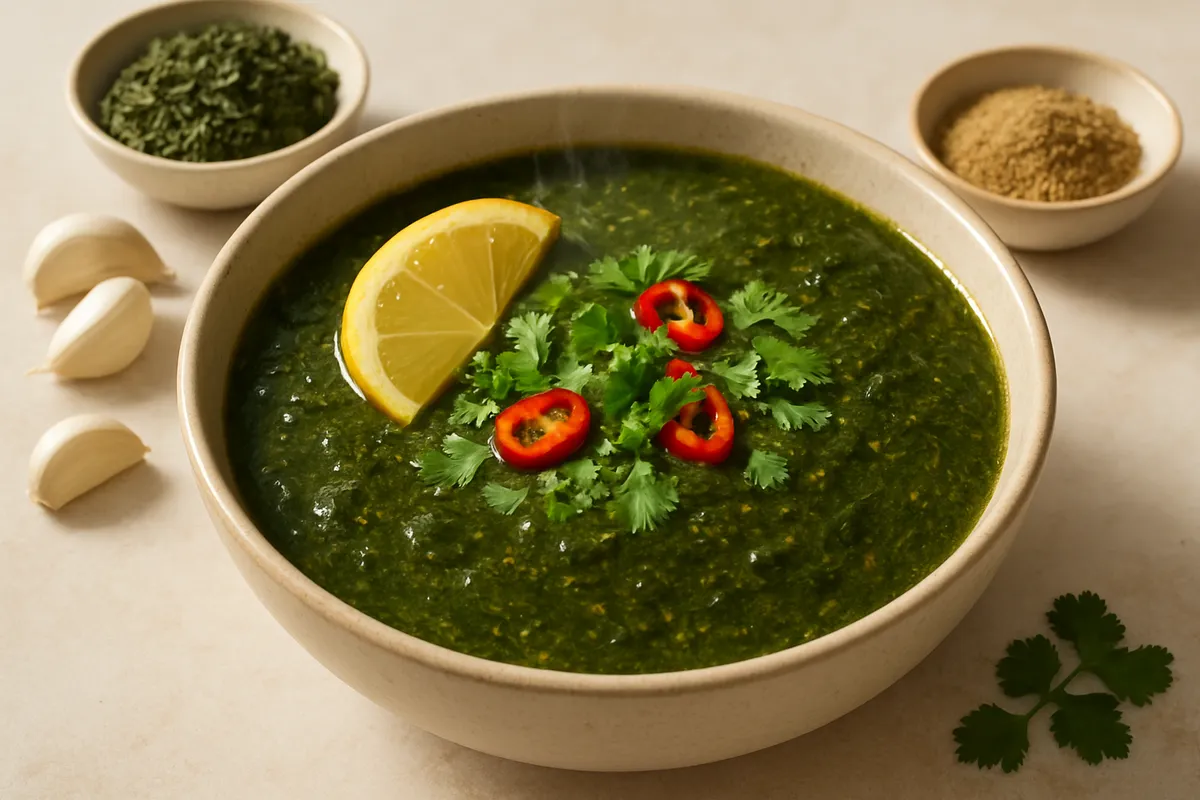
Molokhia (Jute Leaf Soup)
280 cal · 11g protein
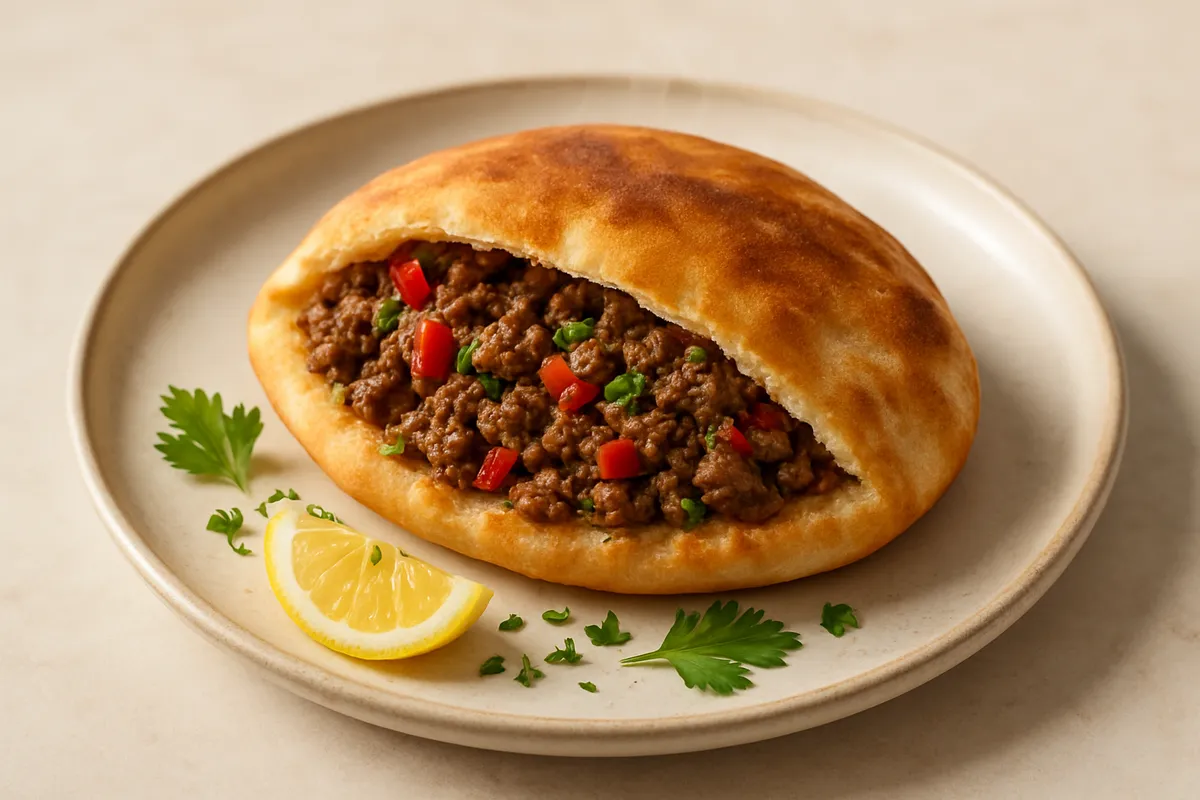
Hawawshi (Meat-Stuffed Bread)
420 cal · 18g protein
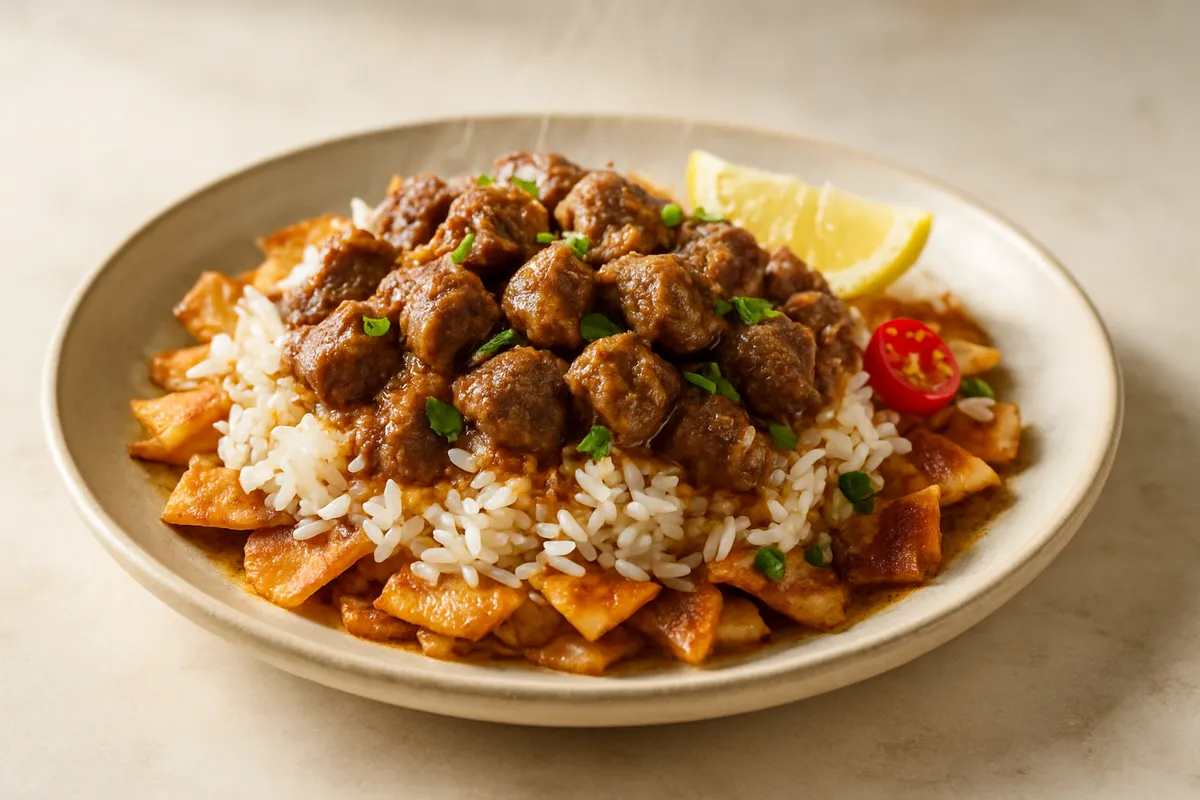
Fatta (Bread, Rice, Meat & Vinegar)
500 cal · 22g protein
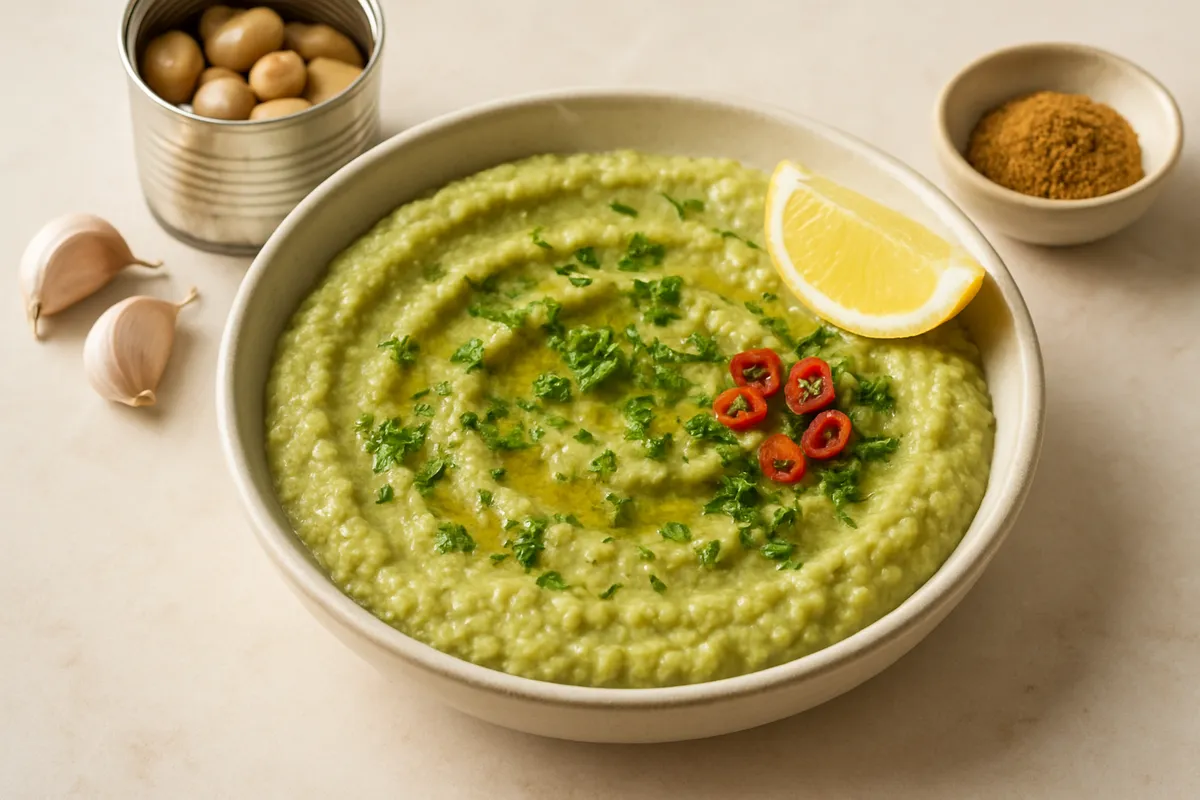
Besarah (Broad Bean Dip)
180 cal · 10g protein
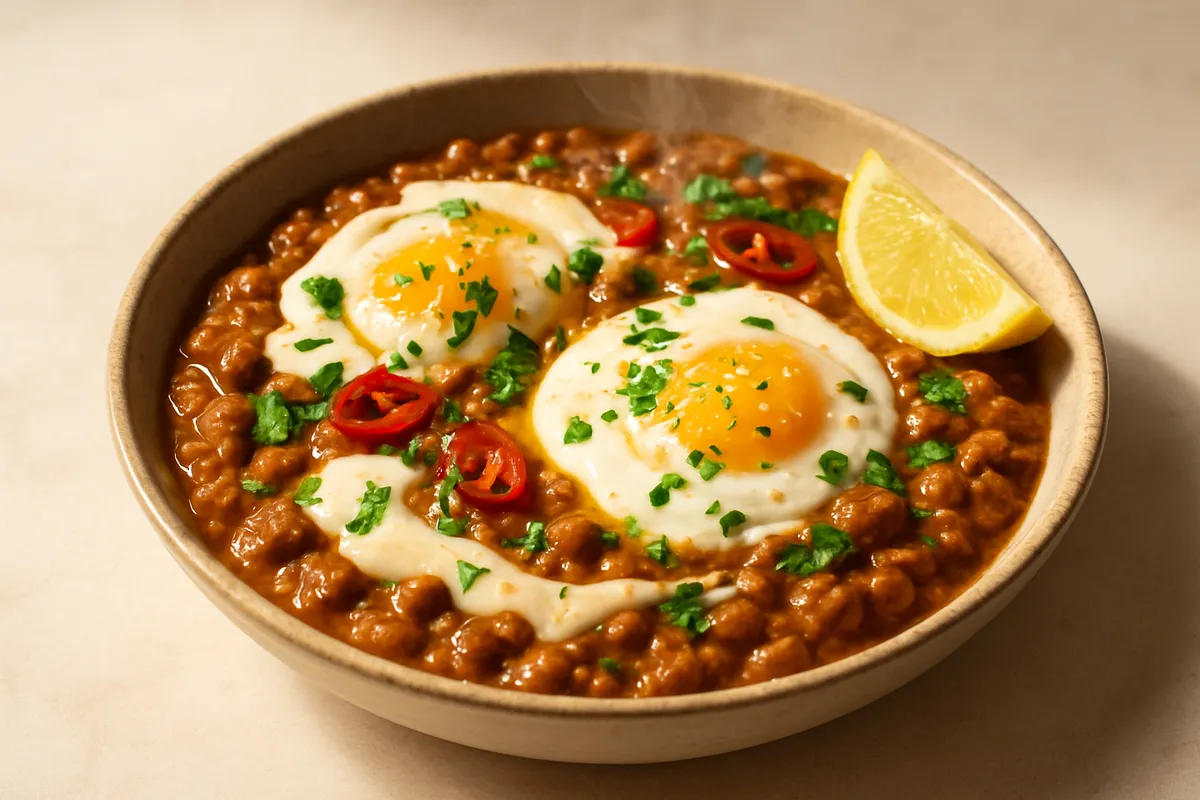
Ful Medames with Eggs & Tahini
420 cal · 16g protein
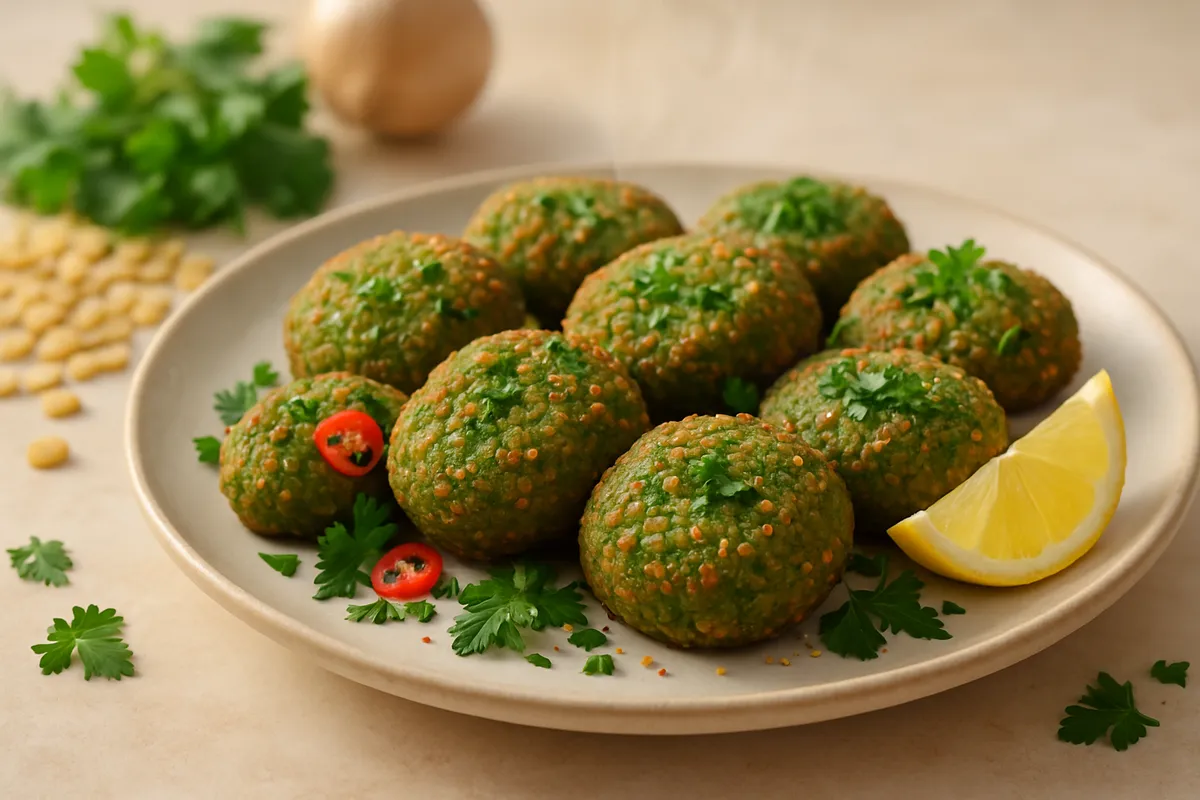
Ta'ameya
284 cal · 14g protein
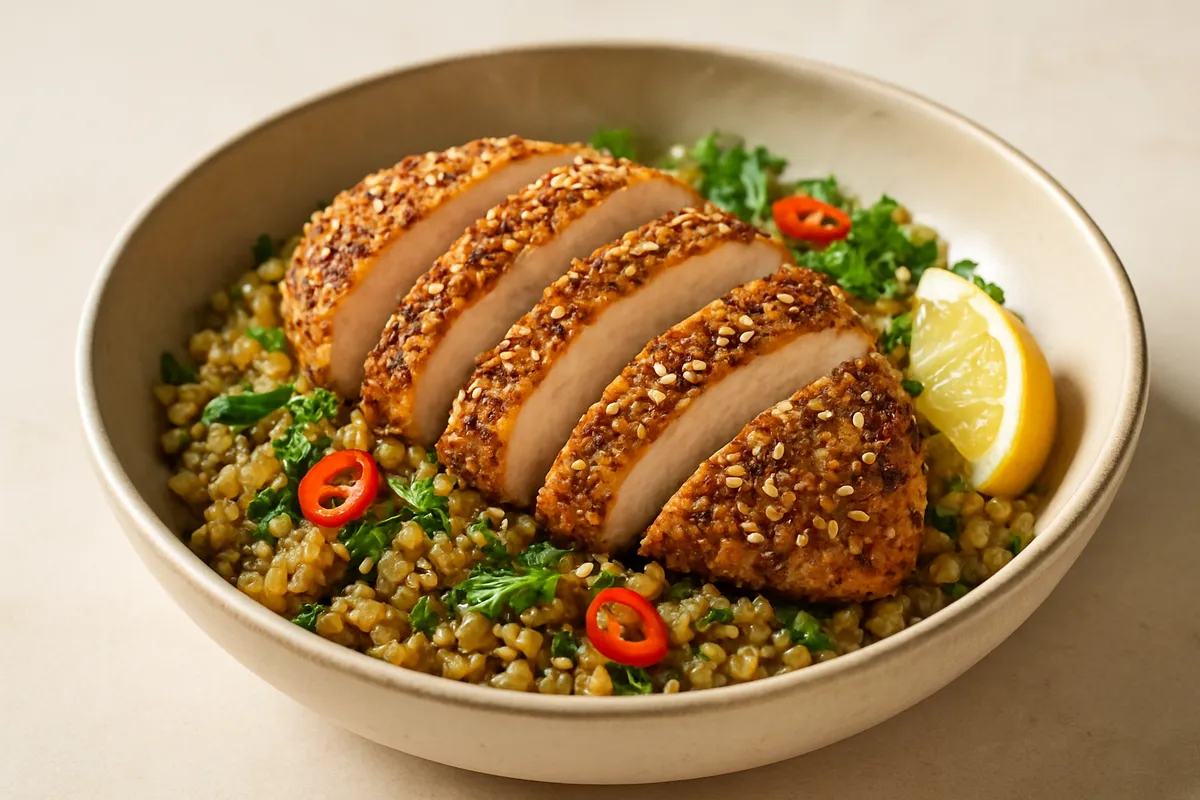
Dukkah-Crusted Chicken & Freekeh Bowl
540 cal · 40g protein

Light Basbousa Squares
190 cal · 5g protein
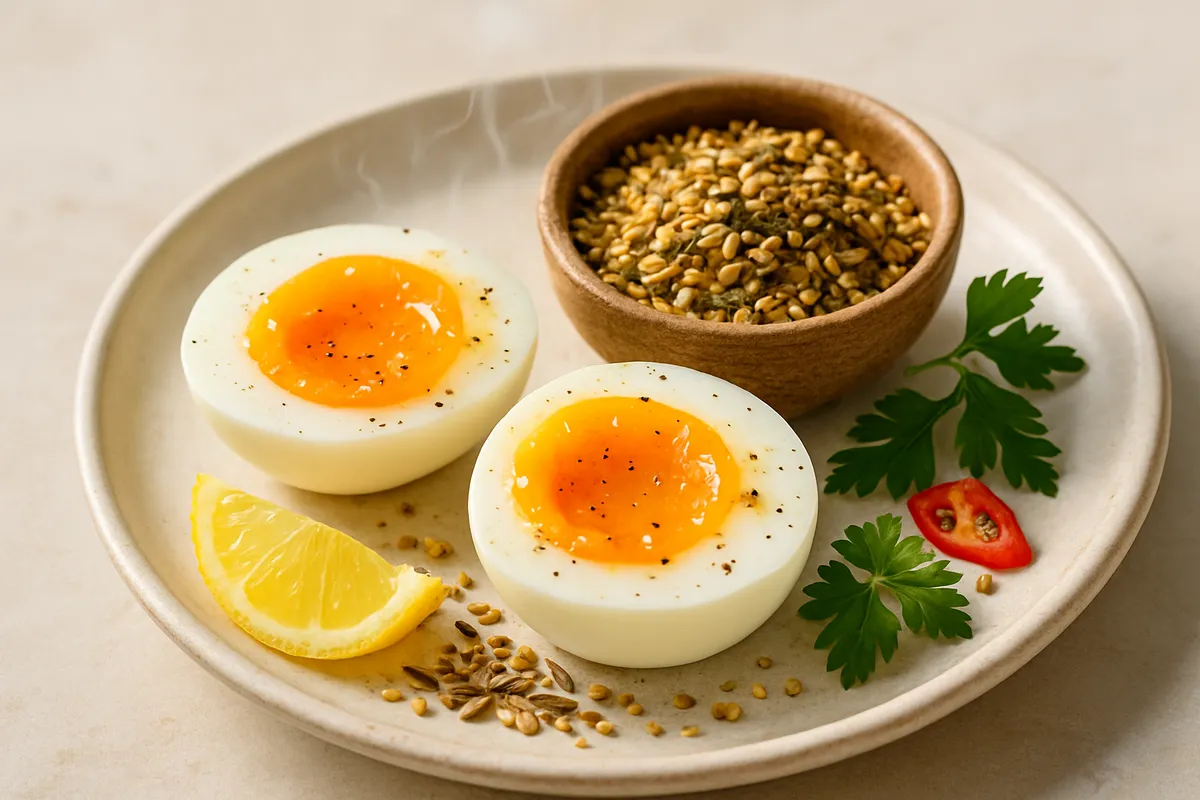
Boiled Eggs with Dukkah Dip Pot
220 cal · 15g protein
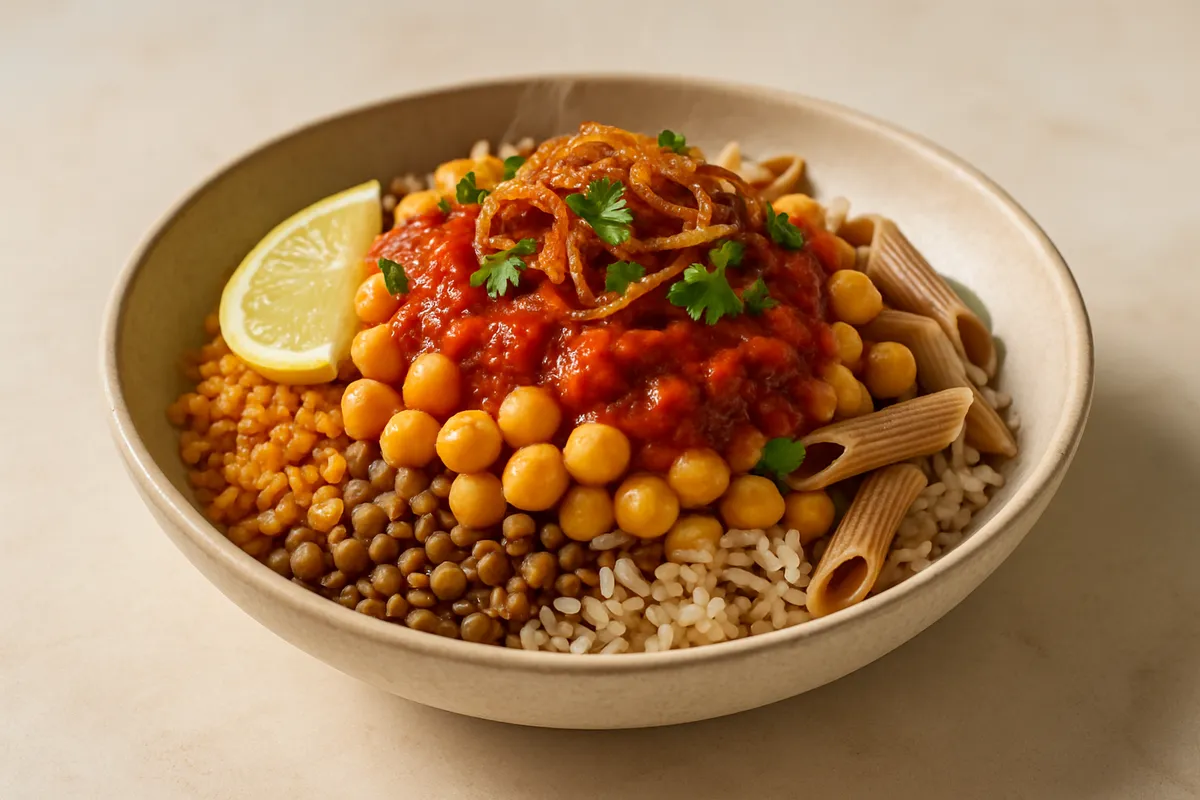
Koshari-Style Lentil, Rice & Chickpea Bowl
686 cal · 27g protein
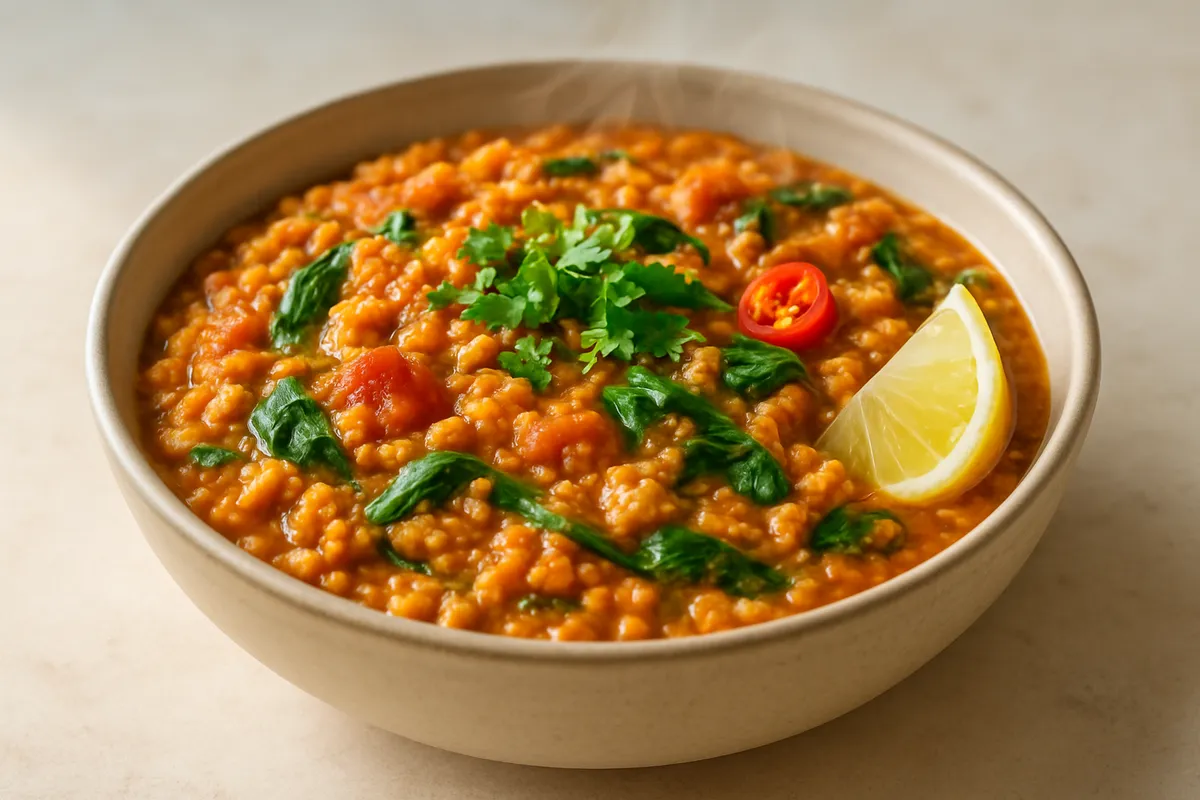
Cumin Lentil, Tomato & Spinach Comfort Lunch Pot
433 cal · 31g protein